
Blog
The ultimate island guide: Tinos

Last summer was my first time visiting Tinos, but it had long been on my radar. I’d read about its quietly brilliant food scene and growing reputation as one of the Cyclades’ most exciting gastronomic destinations. I’d met people who’d long owned homes on Mykonos selling up and relocating to Tinos, drawn by a slower pace of life. I’d read it was one of Greece’s most important pilgrimage sites, home to a sacred icon that compels devotees to crawl from the port to the church on their knees, all year round but particularly on 15 August, a holy day in the Orthodox calendar. And, crucially, I knew that Tinos was a little off the beaten trail — no bad thing in the ever-popular Cyclades.
I joined my sister and her family on Paros, and from there we travelled on to Tinos. They had packed in the rat race in the spring of 2024, channelling the Durrells by moving to a Greek island in search of a simpler, more wholesome life. As we disembarked the ferry in Tinos alongside only a handful of other people, and picked up a hire car from the family-run Vidalis office across the road from the port, my first impressions were how traditional it seemed. It felt like a Greek-island holiday destination of yesteryear, refreshingly untouched by modern Cycladic gloss.
Then there was the landscape, so dramatic and distracting that I often found myself having to slow the car down to avoid any mishaps. Tinos is wild, rugged, lunar. There were craggy, scorched hilltops with villages clinging to cliff edges; and valleys that were lush even at the end of summer (though Tinos is completely blanketed in green at the start of the year). Yet everywhere, the flat, still expanse of the Aegean coastline acts as a brilliant blue backdrop, the blazing sun high above.
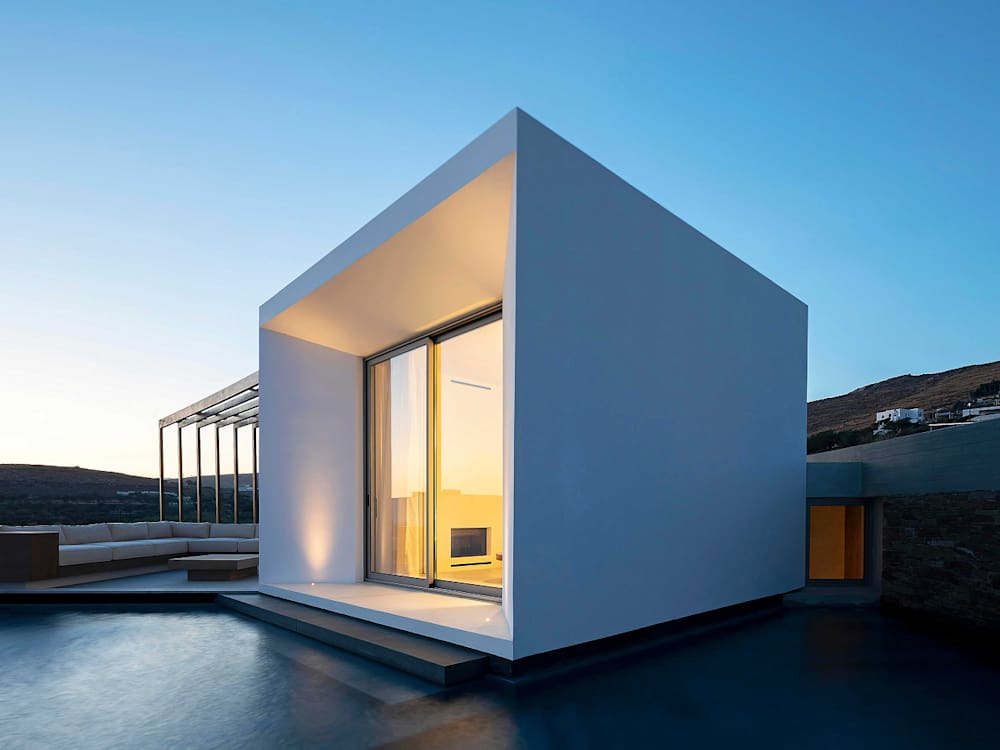
And that famous Meltemi wind — Tinos has some serious gusts. It was surreal to hear howling, raging winds on a clear, sunny, 30-degree day. The Anemoi (gods of the four winds) of Greek mythology are said to reside in Aeolia or Thrace, but surely they live here on Tinos. The bluster does make eating alfresco a challenge, and we’re advised to avoid parking too close to other vehicles in case a rampant gust slams a car door in the wrong direction.
The island is dotted with hundreds of Venetian-era dovecotes (built during the 13th to 18th centuries), which only add to its many charms — a reminder of its agrarian history and the landowners who tended these hills for generations. We spot a lorry seemingly cantilevered on the edge of the coast and soon realise that this is a Tinos hallmark. Turning off a main road, the tarmac abruptly (and literally) falls off a cliff; gates to homes open to vertical driveways, and getting back up the steep, zig-zag dirt tracks once you’ve explored the beaches at the bottom takes some thinking.
Tinos’s main town or chora is not like other Cycladic settlements. Much of the historic buildings were demolished in the Seventies, so don’t expect the signature whitewash sugar-cubes here. Instead, the island has a more Continental feel, with more varied architecture. But there are plenty of pretty mountain villages, so you won’t be disappointed.
What to do in Tinos
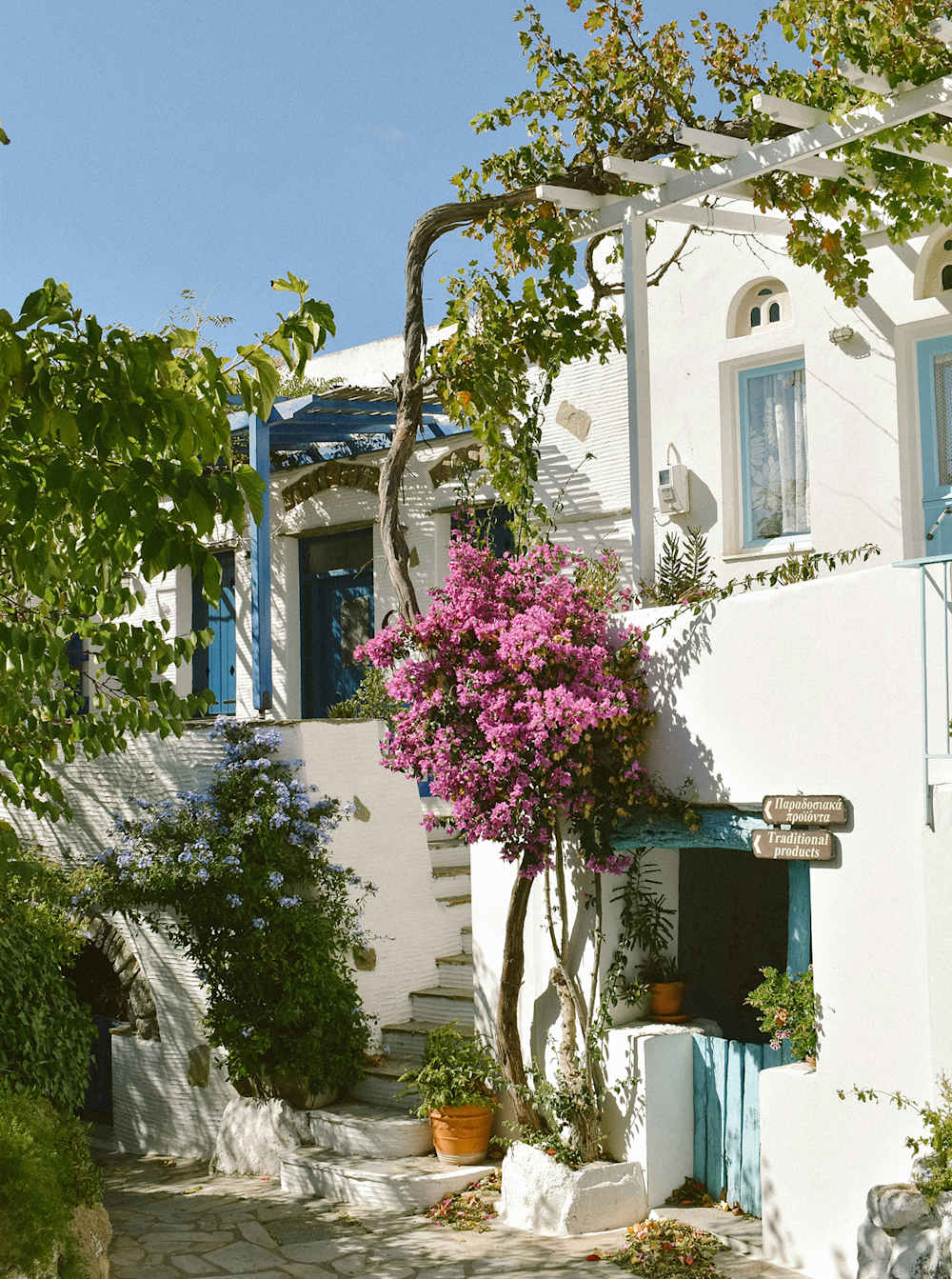
Like many Cycladic islands, Tinos has several scenic villages to visit. Pyrgos, in the north, is perfect for an early evening stroll before dinner. If you’re already hungry, try local confection galaktoboureko (filo pastry filled with custard and syrup) in the main square. Just as pretty is ancient Volax, in the centre of the island, with a population of around 40. It’s one of the oldest settlements on Tinos, with houses built among the rocks. On the west coast, Kardiani is a bright white settlement stacked down the edge of a cliff, 260 metres above sea level.
Other picturesque villages of note in Tinos include Loutra, set in a green valley; Tarambados, which is surrounded by decorative dovecotes; and Isternia, with its dazzling marble architecture and Aegean views. After a stop at the latter, don’t miss a stroll down at the harbour of Ormos Isternion, five kilometres away. Another pretty port awaits at Panormos, a 10-minute drive north-east from Pyrgos.
In Loutra, visit the old Ursulines monastery, established in 1862, where you’ll also be able to learn about some of the island’s folklore at the adjoining museum. Viticulture on Tinos dates back to 4,000 BC — book a tasting at T-Oinos winery and learn how organic vines are cultivated on a landscape dotted with chunky granite boulders.
The best beaches on Tinos
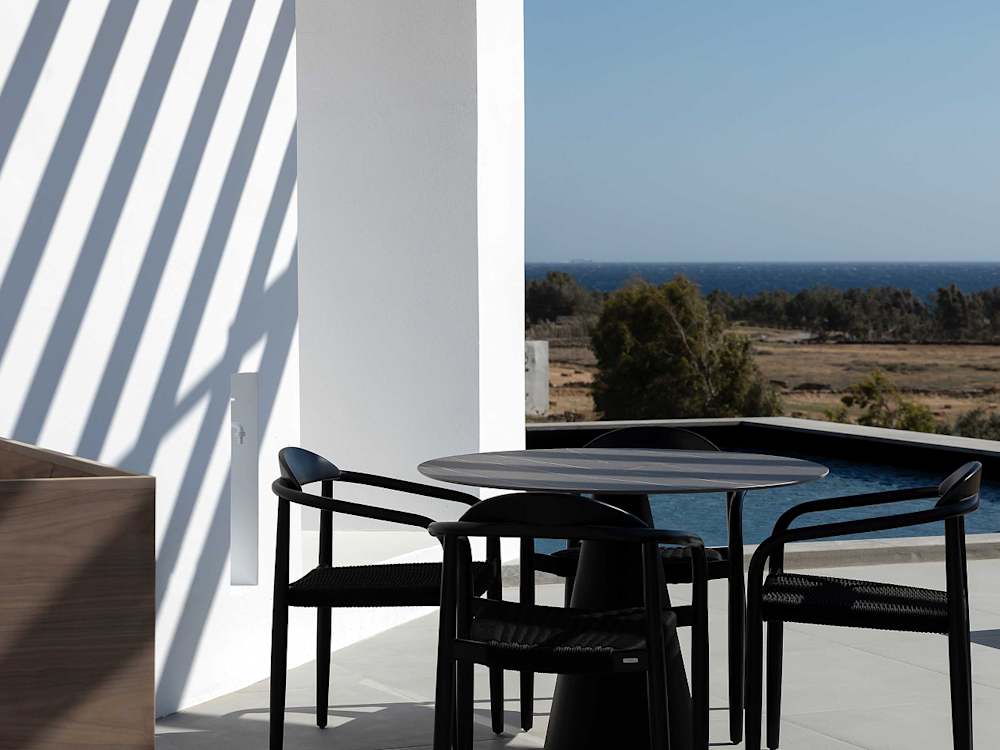
The wind will dictate which coastline you head to for some beach time. If it’s lying low, you can proceed to Kolymbithra on the north-east shore. If you’re after some beach-club buzz, locate Dear John on Ormos Kardianis, but be warned: it’s a very steep, sharply zig-zagging road down to the bay. North-west of Tinos Town, Kalyvia is the sheltered shore for windier days; and Balos pairs a beautiful shoreline with ice-cold cocktails at beach bar Bianco.
You’ll need an off-road vehicle to traverse the unpaved roads, past marble quarries, leading to Mali and Koumelas in the north of the island. From here, you can spy Andros in the distance. For your best Little Mermaid, Ariel-singing-on-the-rocks impression, pack your parasols and make for the clear shores of Livada in a cove on the north-east coast, though you’ll need an off-road vehicle to tackle the dirt path here as well.
Where to eat
Tinos lives up to its gourmet reputation, with even casual pizza restaurants and gyros shacks elevating their output. Just over the road from Agios Fokas — a sandy beach close to Tinos Town — Marathia operates a zero‑waste model with a seasonal menu sourced entirely from island farmers, cheesemakers, fishermen and winemakers. Naturally, seafood takes centre stage, with lots of house-made ferments and pickles.
O Ntinos in Kardiani is one of Tinos’s most in-demand spots, which means it can be hard to get a booking. Don’t panic if you can’t — there are plenty of other worthy alternatives. Try Thalassaki, on a jetty in Isternia where boats from Piraeus used to dock, now favoured by day-trippers coming in off their yachts; and Fou Fou, also in Isternia, for traditional Greek cooking. For mezze magic in the mountains, try Svoura in the village of Komi or Dio Choria in its namesake hamlet.
And for catering that’s good enough for Hermès (the brand, not the winged messenger), you have to try Boui Boui at the edge of Tinos Town — its French chefs were enlisted to feed the attendees of a fashion show the hallowed French house held in a Tinian marble quarry in 2024.
Where to drink
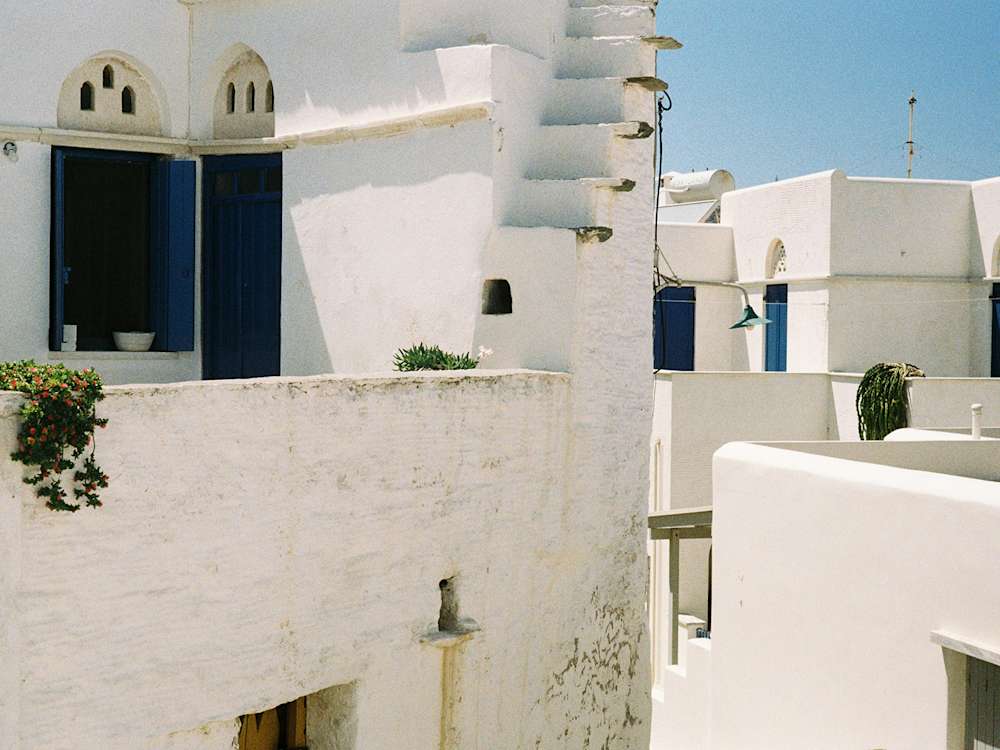
In Pyrgos’s main square, Athmar has tables set up for really soaking up the village atmosphere over a glass or two of ouzo. Up in the maze of streets, Vinia will see you through from coffee to cocktails, with an excellent wine list, too.
For the best sunsets, head west — specifically the village of Kardiani, where you can settle in for sundowners at the aptly named Sunset Bar. And if you’ve made it down to Dear John, you’re in for a treat once the sky begins to darken.
Where to shop
The island has a long tradition of basket-weaving — head to Volax to buy your own, alongside local herbs, olive oil and cut-out artworks from the stalls just outside the historic centre.
Like Paros, Tinos is known for its marble — the most famous of which is a distinguished, dark-green hue — used all over the island for everything from architecture to fountains and even bus stops. There’s a school of fine arts and marble craftsmanship in Pyrgos, and you’ll spot artisans at work in their studios as you stroll around the village. Pyrgos has lots of boutiques you’ll want to browse, including Armonia Concept for jewellery and floaty dresses to take home and stare wistfully at all winter.
Where to stay
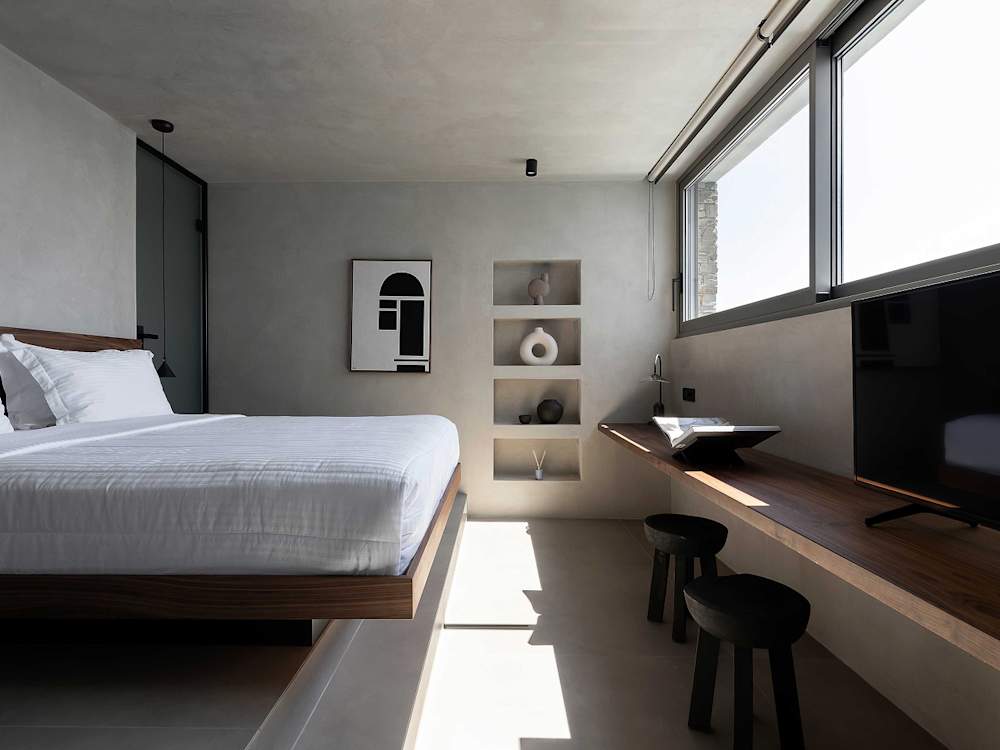
It may only have three suites, but Pnoēs Tinos is the perfect Greek hideaway for your time on Tinos. Each room is a mini-villa with everything you could possibly need, including a giant sunken bath tub with a rain shower standing in for a waterfall, a wraparound outdoor pool with hydro-jets, and a terrace for watching the sun set over Mykonos and Syros in the distance. Inside, the two-storey suites have the kind of decor that will see you adding everything to your moodboard, in the full knowledge that urban London flats could never pull off this all-Greek aesthetic (walnut wood, limewashed walls, smooth-edged ceramics) quite so successfully. Each suite is arranged around the white and grey staircase that runs through the boutique hotel.
Breakfast arrives each morning in a thoughtfully packed hamper, with bread and pies from a local bakery, island-produced milk, butter, honey, cheese and tomatoes, and freshly squeezed orange juice. The hotel is located at the island’s southern tip, close to beaches, lots of acclaimed restaurants (including Marathia) and the island’s chora.
What to know before you go to Tinos
How to get to Tinos Fly to Athens and head to the port at Rafina to catch a boat across to Tinos (the fastest crossings are around two hours); or touch down in Mykonos and take the 20-minute ferry trip. You’ll also be able to sail in from neighbouring isles, including Syros and Andros.
How long to spend in Tinos You’ll need at least three nights to tour the island properly.
Best time to go If you want to see Tinos all green and lush, aim for the early spring. Otherwise, don’t be afraid to swerve the summer crowds and visit in late September or even October instead.
Known for Dovecotes, pilgrims, wind and gourmet food.
Transport tips A car will come in handy, especially a four-wheel drive for accessing the more remote beaches. There are car-hire offices at the port, so you can pick one up as you come off the boat.
Sail on to Paros, or discover some of our favourite Greek island hotels
Related Posts

The Ultimate Luxury Slovenia Itinerary: Our First-Hand Guide
-
Posted by
Ms Luxury Brand

How to hang shelves: A step-by-step guide with pictures
-
Posted by

Your Ultimate Summer Guide to the South of France
-
Posted by

The Ultimate Guide to Shower Design Trends and Walk-In Shower Ideas
-
Posted by

The Only Christmas Gift Guide You’ll Need This Year – The Anna Edit
-
Posted by

Ultimate Guide To Choose The Best Mulberry Bags For You
-
Posted by


Heli-adventures in New Zealand’s South Island
-
Posted by

Find the OKU hotel that fits your summer style
-
Posted by

Here’s Our Updated City Guide – The Anna Edit
-
Posted by

An Insider’s Guide to the Best Beauty Treatments in Seoul
-
Posted by

20 Most Luxurious Perfume For Men Picks (2026): The Ultimate Guide
-
Posted by