
Blog
The Ritz-Carlton, Bangkok Stakes Its Claim in a City That Has Seen It All

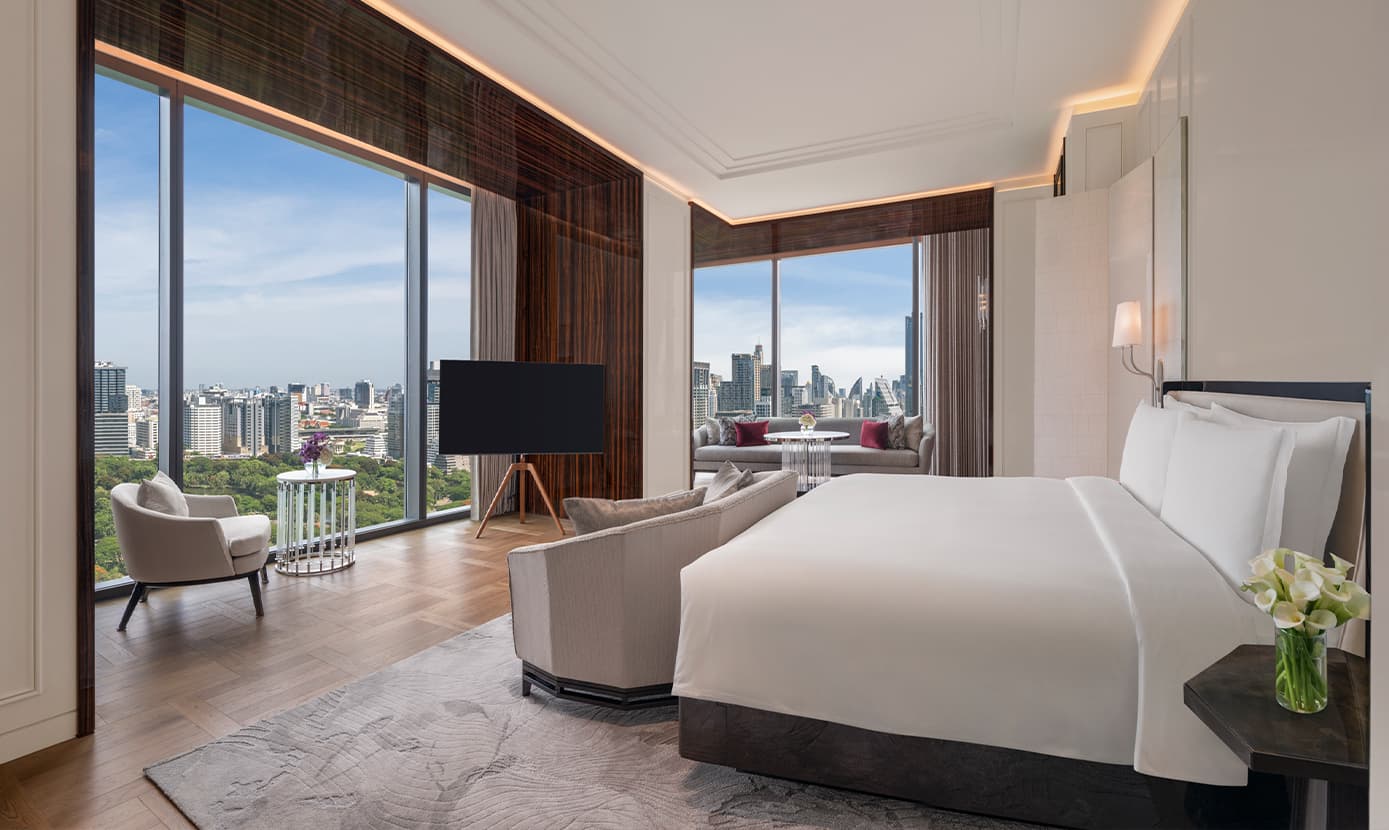
Bangkok is a city suffocating in luxury. It is likely the only place on the planet where even the mid-tier chains perform with a level of service that makes London or New York makes everything else look second-rate. In a landscape where five stars is the bare minimum, the sheer volume of high-end rooms is staggering. However, there was a glaring, gold-leafed hole in the skyline for years.
The Ritz-Carlton, Bangkok, inaugurated in late 2024, is a late arrival to a party that has reached its peak. They entered the arena at a moment when several local legends already had a white- knuckled chokehold on the “world’s best” lists. In a city that has perfected the grand hotel, showing up late feels like a gamble. Thus, the question is not whether the rooms are nice, but what a legacy brand can offer a city that has already seen it all and done it better.
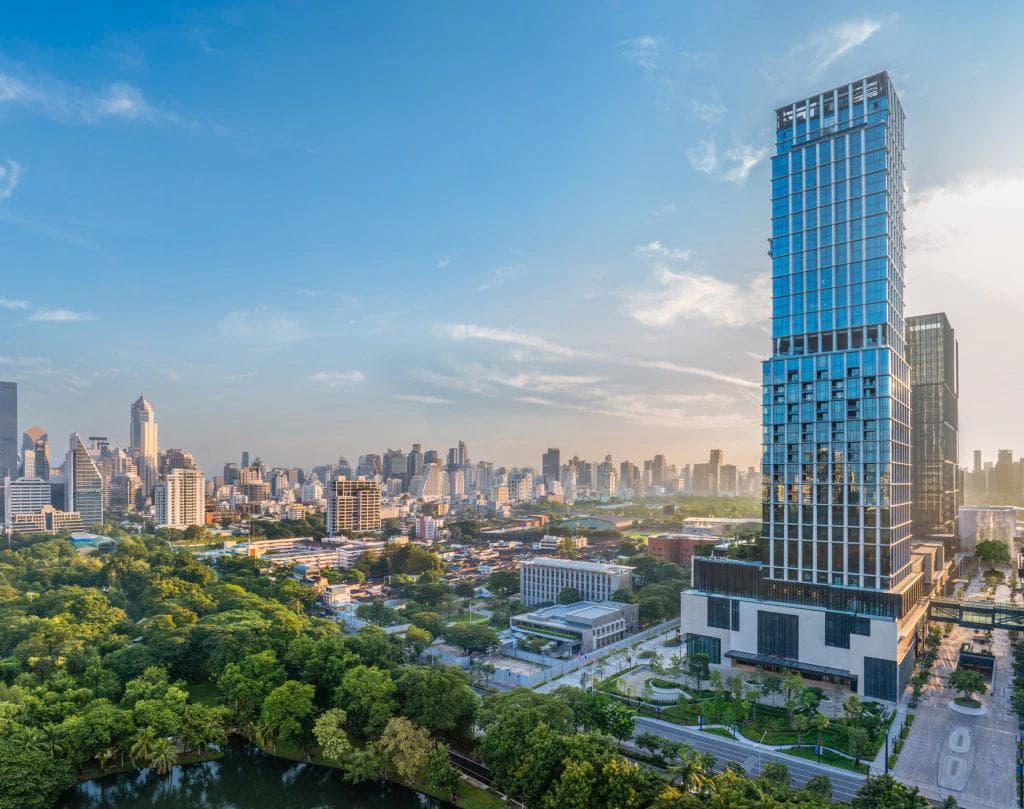
The answer starts with rejecting the “one size fits all” corporate template. You usually know exactly what you’re getting with a Ritz. But this property is doing something totally different. At times, it feels like an attempt to redefine the modern hotel by acknowledging Bangkok’s specific, chaotic energy. In a city this tight-knit and tumultuous, true luxury does not come in the form of a marble lobby. Instead, it is the tactical possession of serenity and space.
The hotel does so by occupying a 216-metre-high shard within One Bangkok, a massive urban behemoth that functions as the city’s latest nervous system. It overlooks the green lungs of Lumphini Park, offering a rare, stabilised view in a metropolis that is usually a blur of concrete. The architecture — a collaboration between Chicago-based SOM and Thailand’s A49 — is a series of ascending open-air terraces that cut into the skyline.
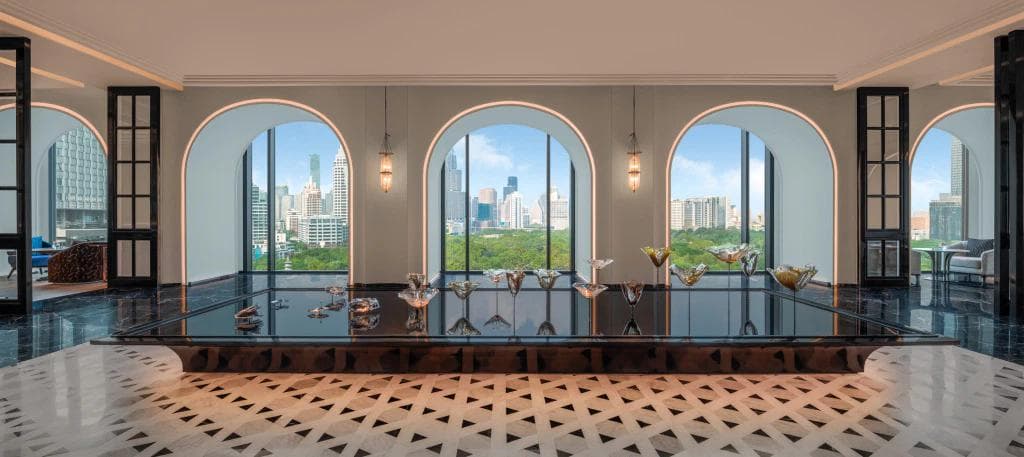
Inside, design studio PIA has ignored the usual Instagram corner traps. Instead, it leaned the design into a collision of the past and the future, calling it a “Meeting of Two Civilisations” — a reference to the 19th-century Thai nobility of Wireless Road. In practice, this means a grand foyer that feels less like a hotel and more like the drawing room of a private, exceptionally wealthy residence. It is warm, intimate, and filled with black-and-white photography that anchors the building in a past it was not actually part of.
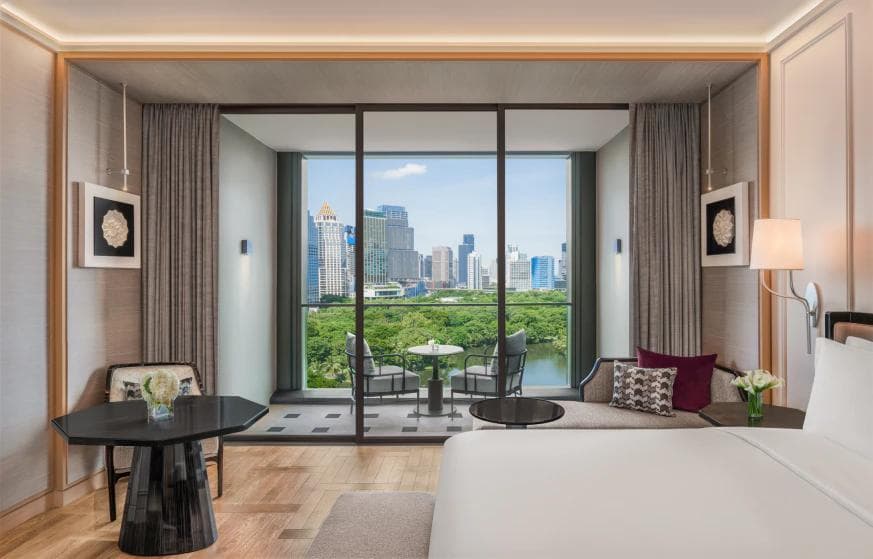
The rooms are a structural win. Most luxury hotels in Bangkok trap you behind unfeeling glass. The Ritz-Carlton, Bangkok counters this with private loggias and terraces. These are actual outdoor spaces where you can feel the city’s energy without the distractions, with some even offering views of Lumphini Park. Whether it is the 50sqm deluxe rooms or the 389sqm penthouse, the focus is on a sense of unfolding. They offer enough physical volume to escape the claustrophobia of the streets below, which, for anyone who frequents Bangkok would know, is a rarity.
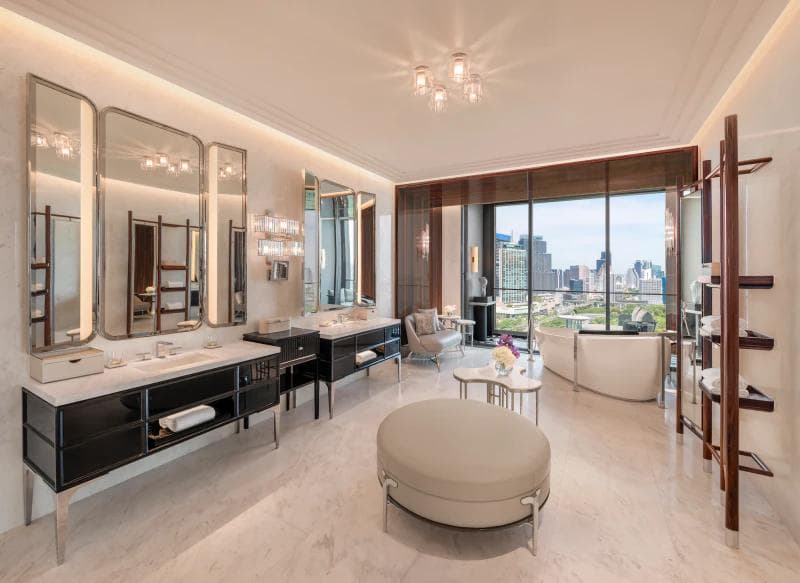
Then there is the dining, which basically flips the bird at the city’s food snobs. The golden rule, that you should never eat in your hotel, is being tested here by sheer talent. You have Duet by David Toutain, a French Michelin heavyweight who has turned a glasshouse into a laboratory for modern French cuisine. Meals here are sensorial, rigorous, and completely devoid of the usual hotel-buffet laziness. For something less clinical, Lily’s reimagines classic plates for a communal, high-energy crowd.
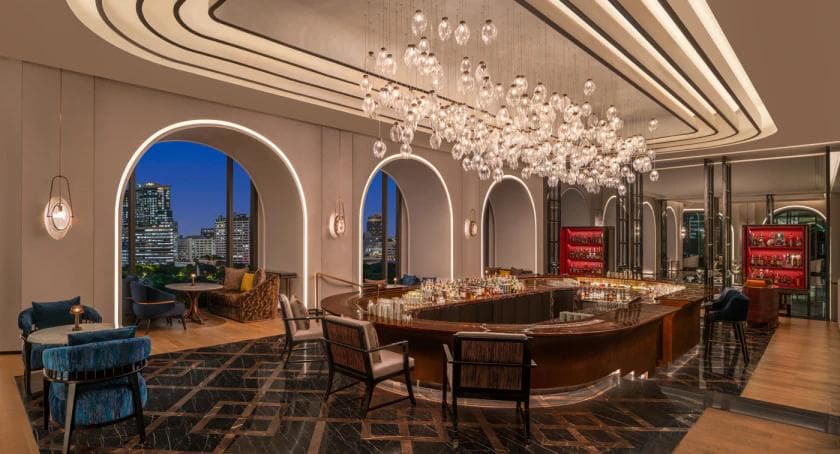
Perched at the top of the food chain is the Club Lounge on the 23rd floor. The dedicated space serves as a private, sophisticated retreat for those who need to bypass the lobby entirely. With five daily culinary presentations and a dedicated concierge, it functions as a hotel within a hotel. When the sun sets, Caleō takes over. Perched over the skyline, it leans into a theatrical, late-night romanticism with cocktails that feel more like performance art than drinks.
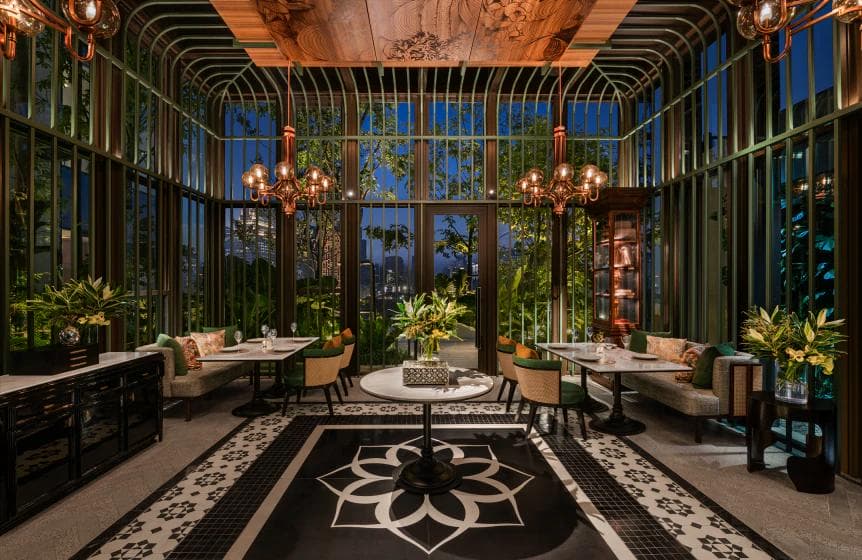
All these, and more, make The Ritz-Carlton, Bangkok a high-stakes, aggressive entry into a market reaching its saturation point. This is a rare instance where the hotel brand actually lives up to its own mythology, offering a tactical advantage that goes beyond high thread counts. The Ritz-Carlton Bangkok knows exactly what it is up against. A hotel should not just be a place to hide from a destination. It should be part of it. Because, at the end of the day — though it has become rare — that is the only reason for a hotel to exist at all.
This article was first seen on Men’s Folio Singapore.
For more on the latest in hotel and travel reads, click here.
Related Posts

Best Couple Massage in Bangkok: What Makes a Couple Spa Experience Feel Truly Luxury
-
Posted by
Ms Luxury Brand

Leading the charge: Earth Day-ready hotels that utilise renewable energy
-
Posted by

Where to stay spring/summer edit 2026
-
Posted by

Facial for Sensitive Skin: What to Choose in Bangkok
-
Posted by

How Often Should You Get a Facial in Bangkok?
-
Posted by

Facial for Men in Bangkok: Why More Men Are Booking Luxury Facials in 2026
-
Posted by

Here’s Our Updated City Guide – The Anna Edit
-
Posted by

Best Thai Massage in Bangkok: Traditional vs Aromatic Oil vs Deep Tissue Which One Is Right For You?
-
Posted by

Urban sprawl: our top hotels for take-it-easy city breaks
-
Posted by

Best Tailor in Bangkok: Why Perfect Tailor BKK Is a Top Choice for Bespoke Craftsmanship
-
Posted by

Office Syndrome Massage in Bangkok: How to Fix Neck, Shoulder & Back Pain the Right Way
-
Posted by

The art of leisure: our favourite hotels for a cultured break
-
Posted by