
Blog
“Hockney/Paricio: Cycles of Renewal” Debuts at Halcyon’s Flagship Gallery

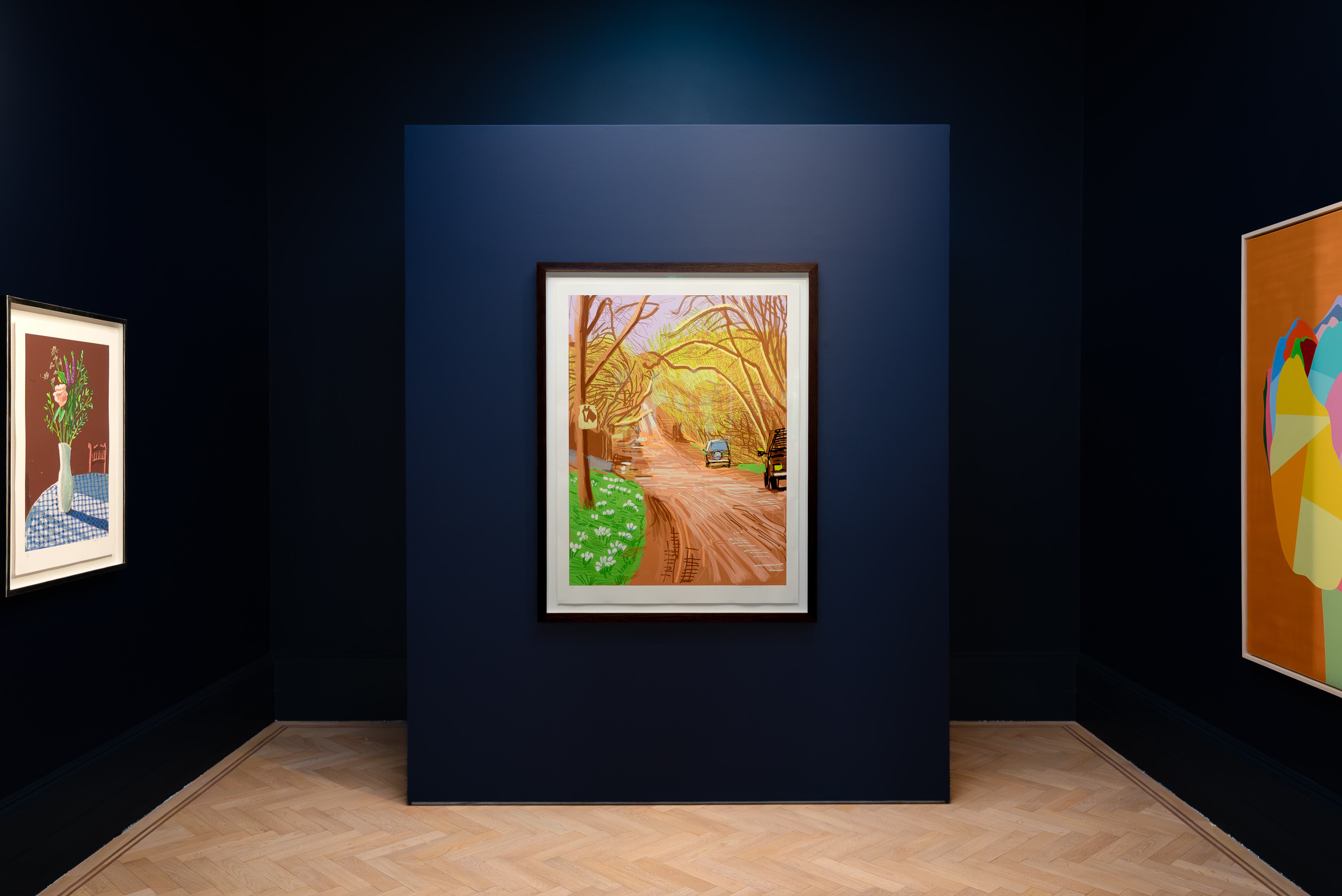
April 2026 sees Halcyon Gallery stage a dynamic pairing of two painters separated by generation yet connected by creative instinct. Dubbed “Hockney/Paricio: Cycles of Renewal” the exhibition explores how British artist David Hockney and Spanish painter Pedro Paricio draw inspiration from their surroundings, lived experiences and art history.
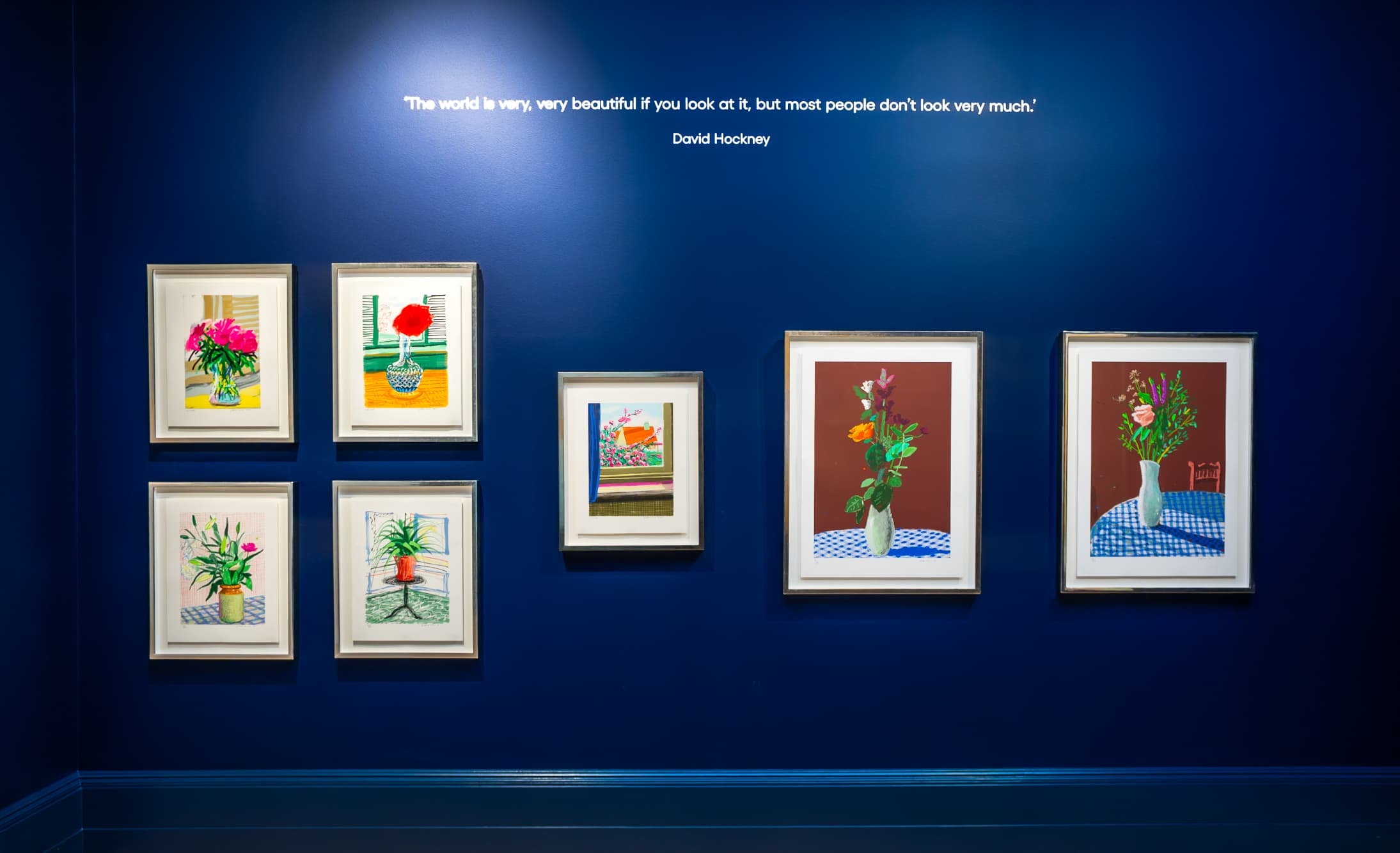
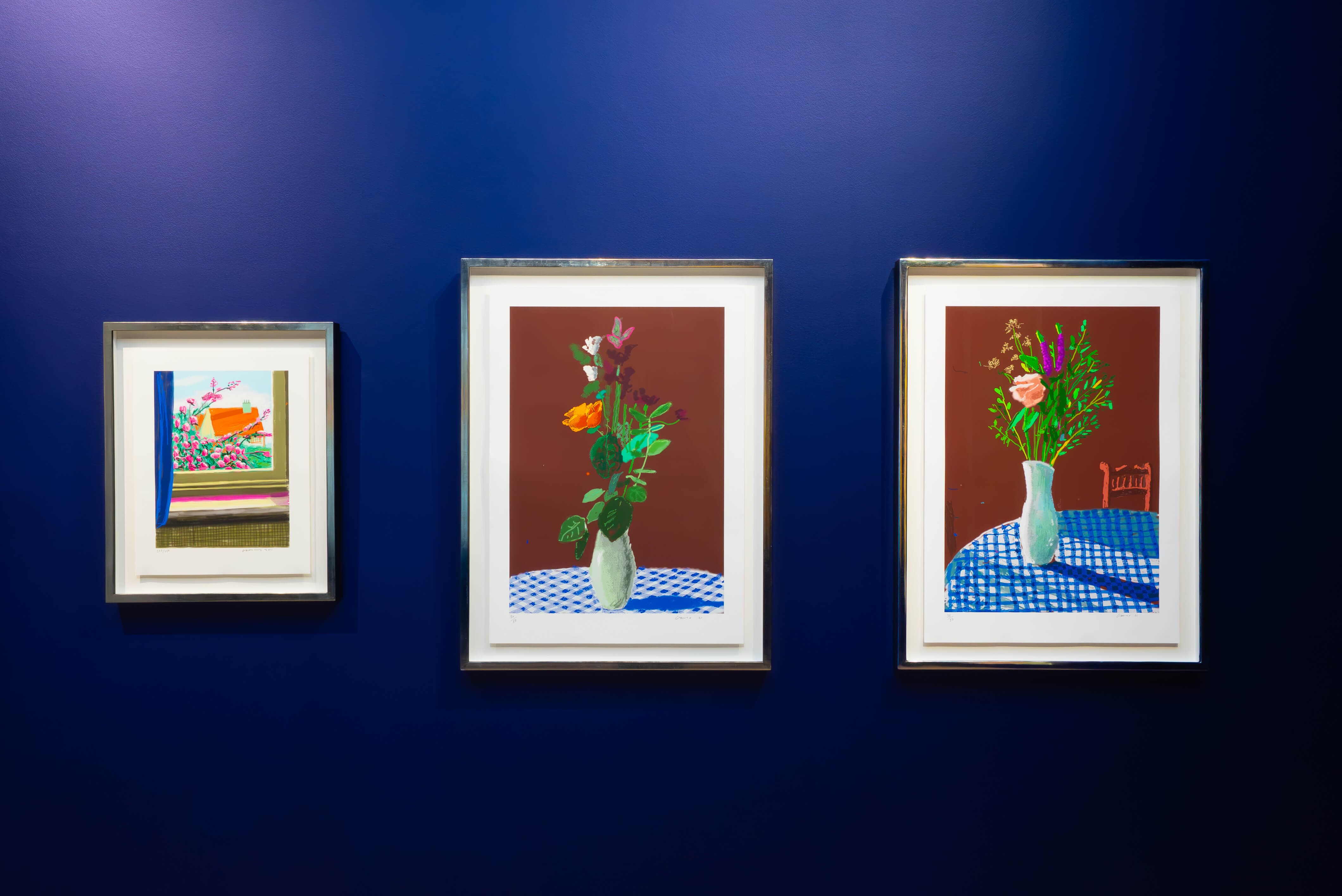
At its centre is David Hockney, whose career has long been defined by reinvention. Over seven decades, Hockney’s work has shifted fluidly between mediums, from printmaking to digital drawing, without relinquishing his preoccupation with space, colour and perception. The exhibition foregrounds this evolution through a selection that includes iPad works, lithographs and etchings, positioning technology as a continuation of his practice. Even in digital form, Hockney’s work retains the immediacy of observation — a sensibility sharpened during his visits to Yorkshire and later, in Normandy, where seasonal change became a recurring source of inspiration.
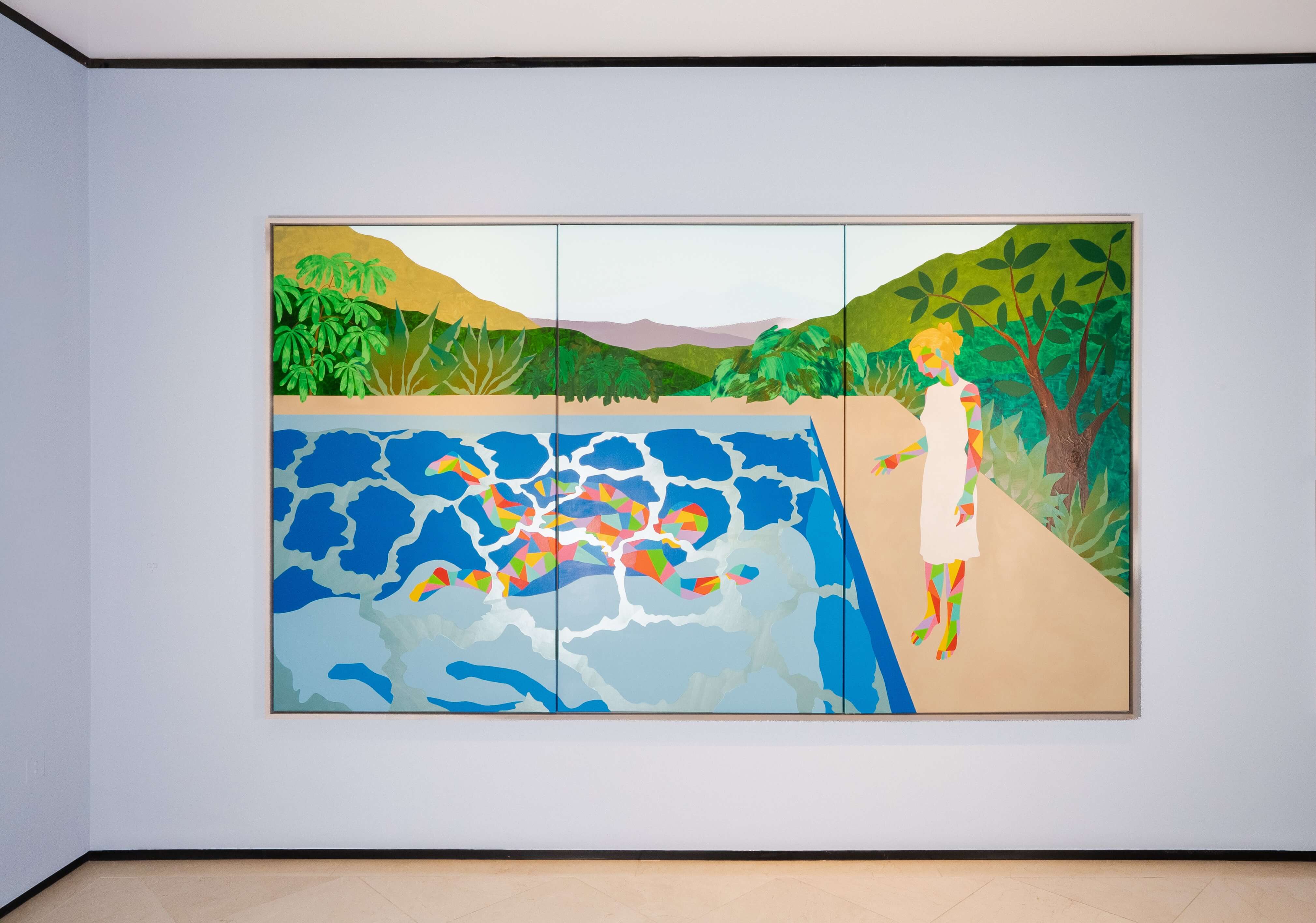
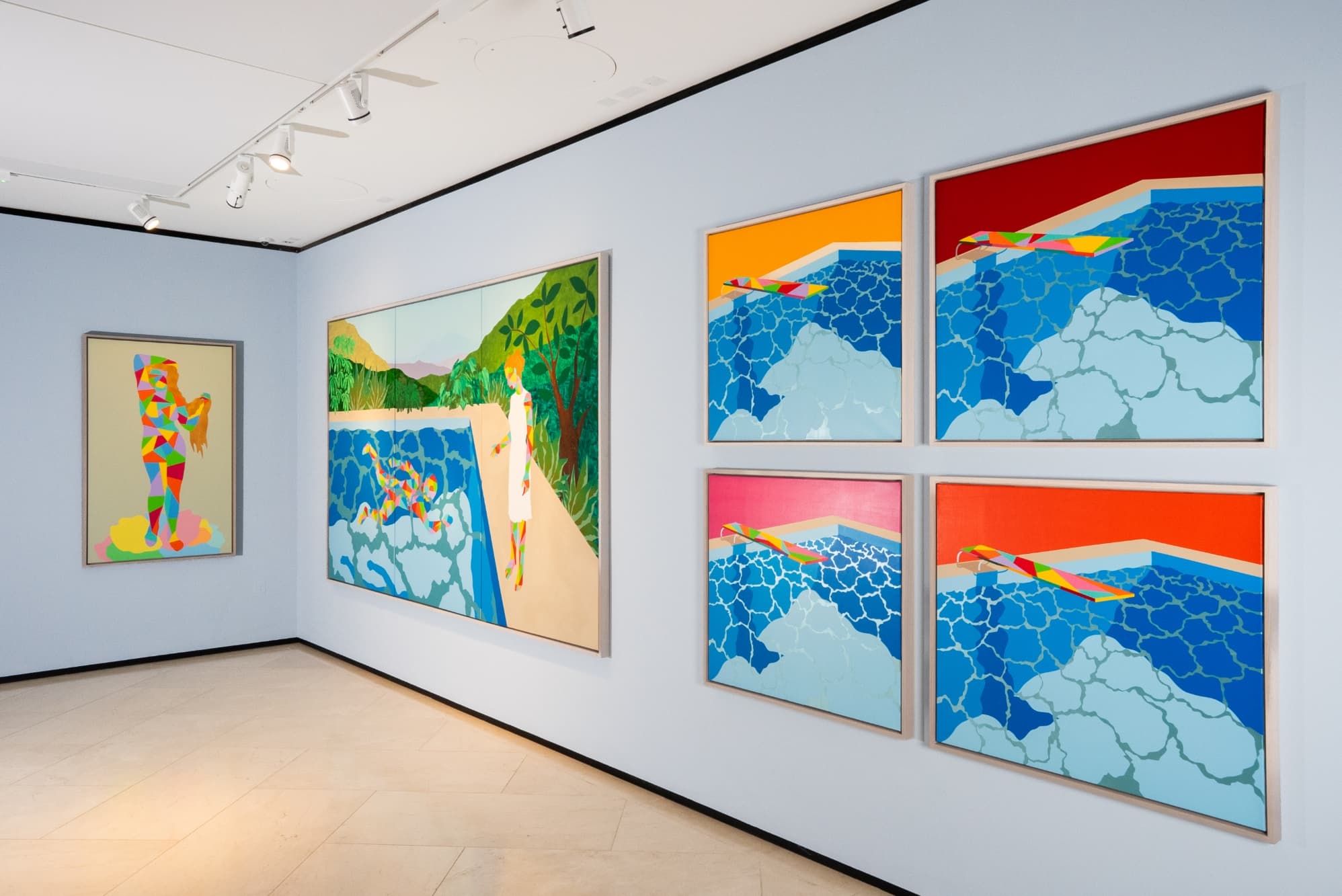
Opposite him is Pedro Paricio whose contribution to the exhibition centres on a new body of work that revisits Hockney’s most recognisable motifs — pools, landscapes, still lifes — and subjects them to a process of abstraction. Rendered in fractured planes and heightened colour, these works distil, compress and reassemble, turning familiar compositions into something more elastic.
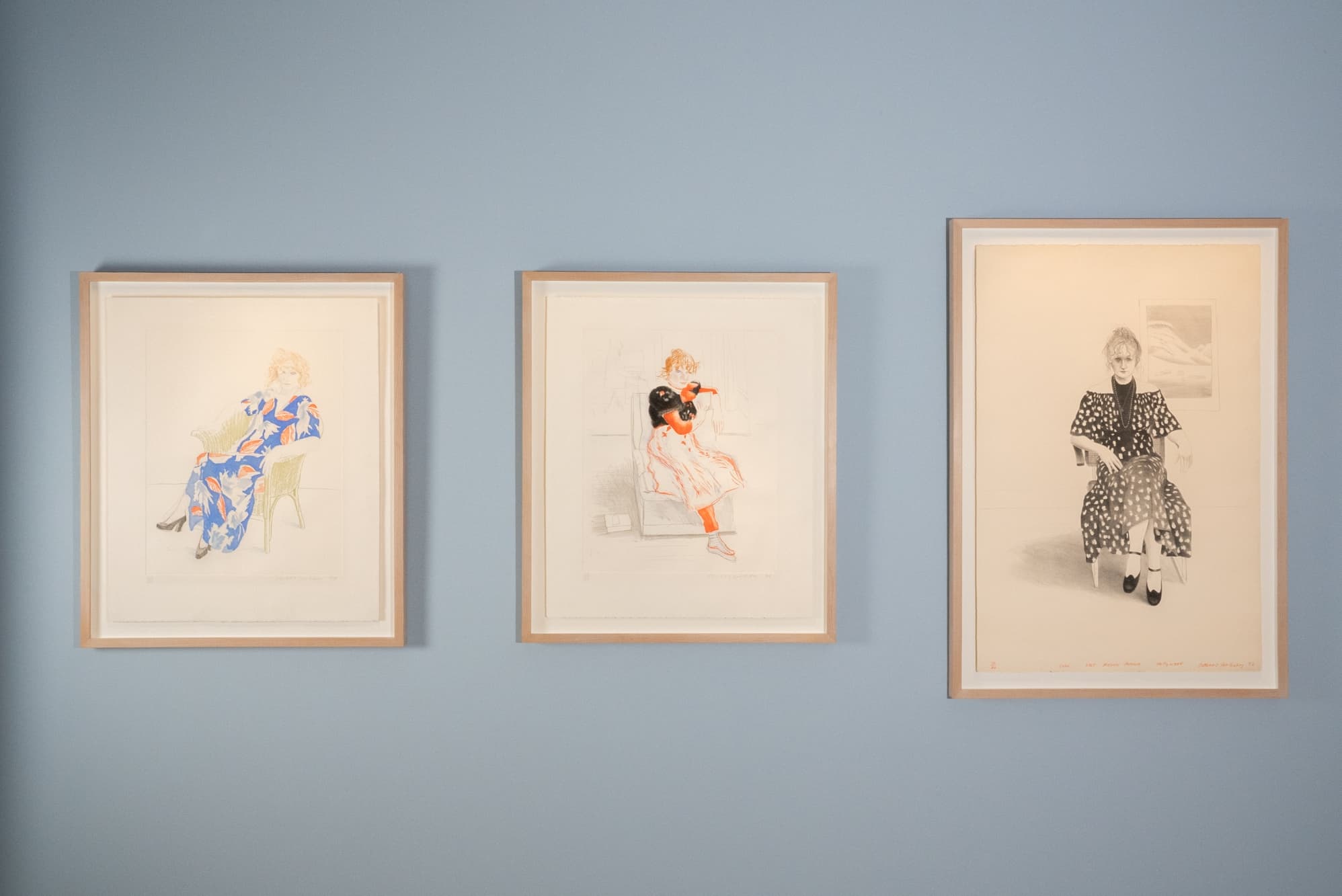
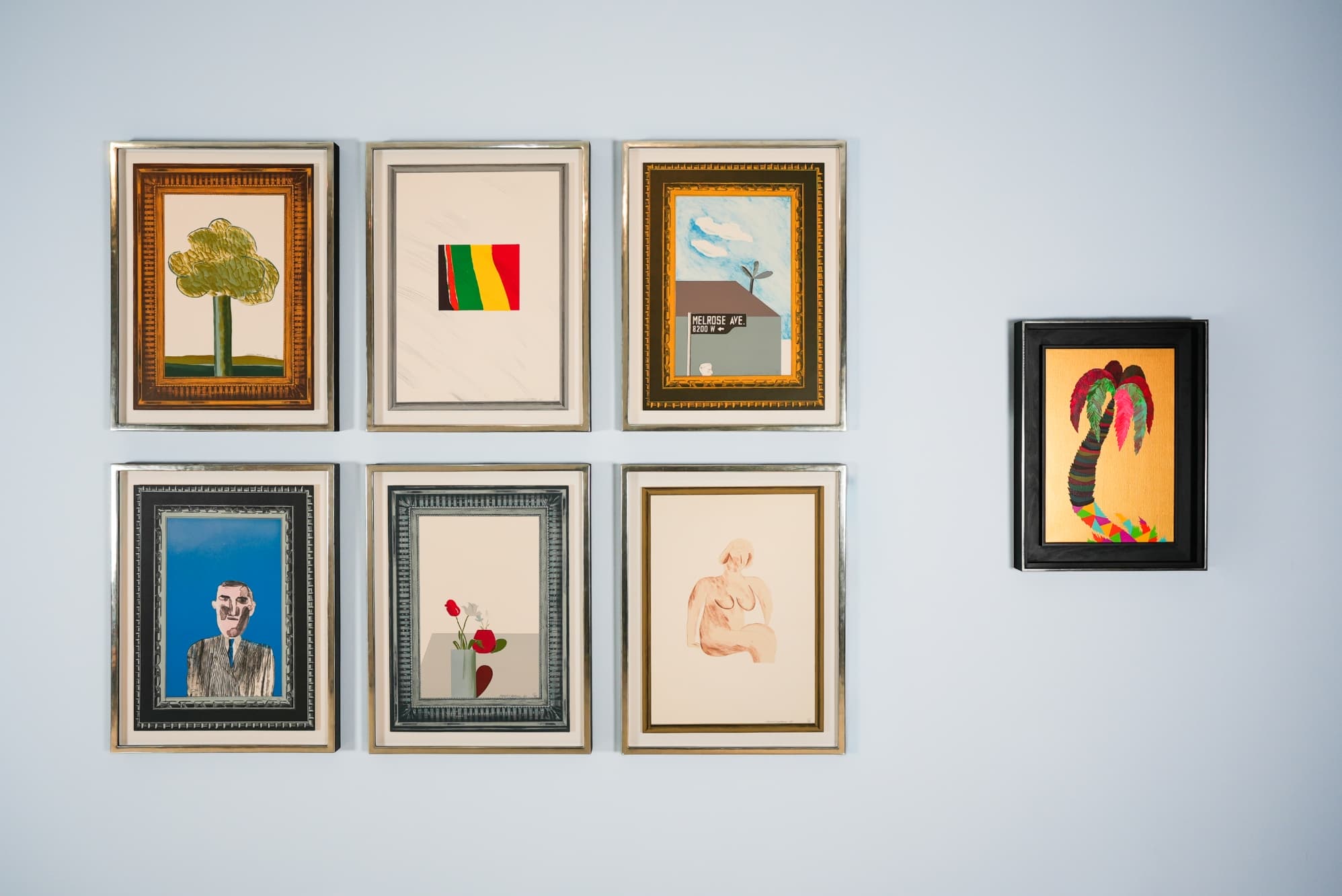
The relationship between the two artists is framed as an ongoing dialogue rather than a retrospective. Paricio’s engagement with Hockney reaches back through Pablo Picasso to Paul Cézanne, tracing a lineage in which ways of seeing are inherited, challenged and reworked. What emerges is a continuous chain of visual thinking shaped through reinterpretation.
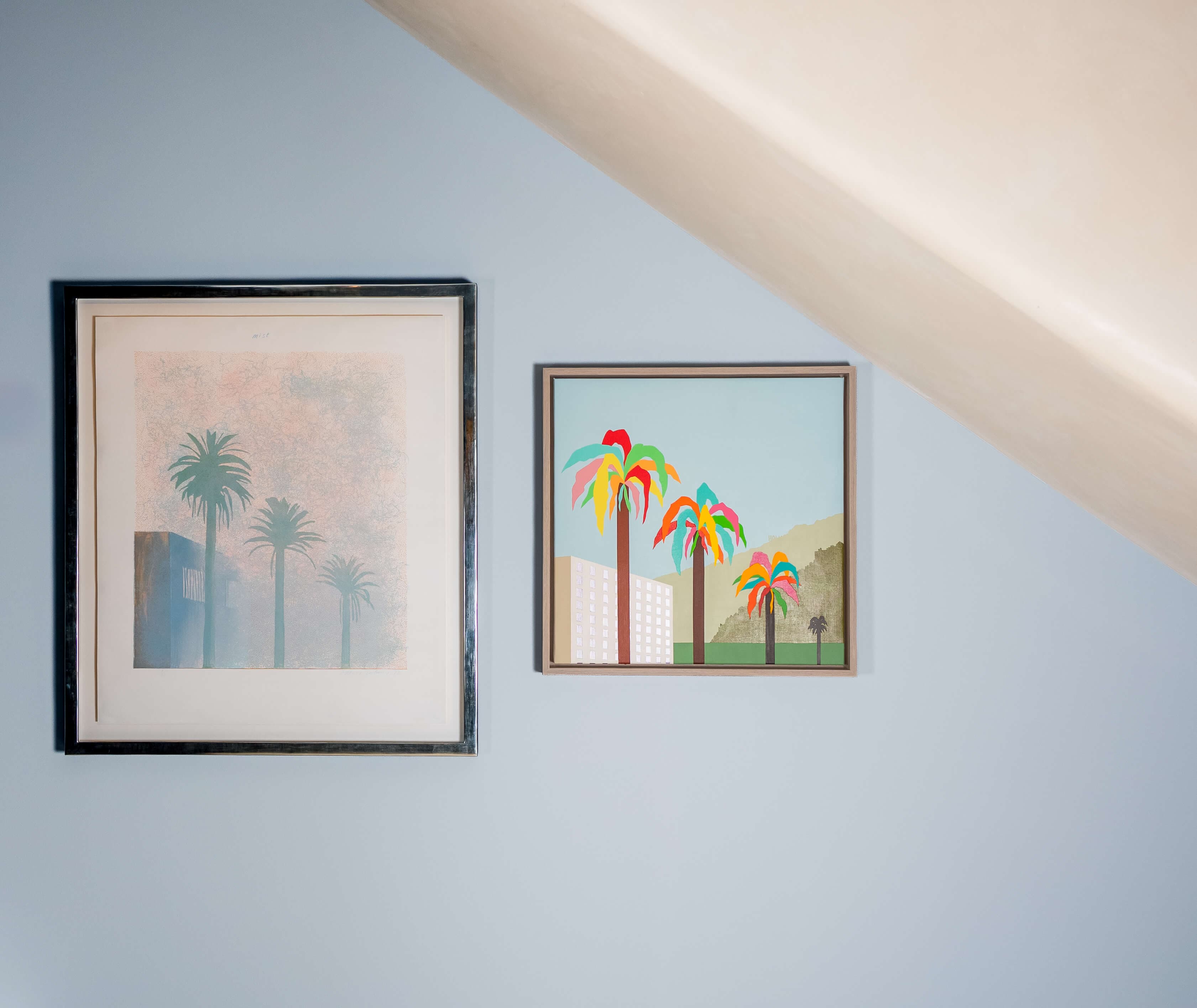
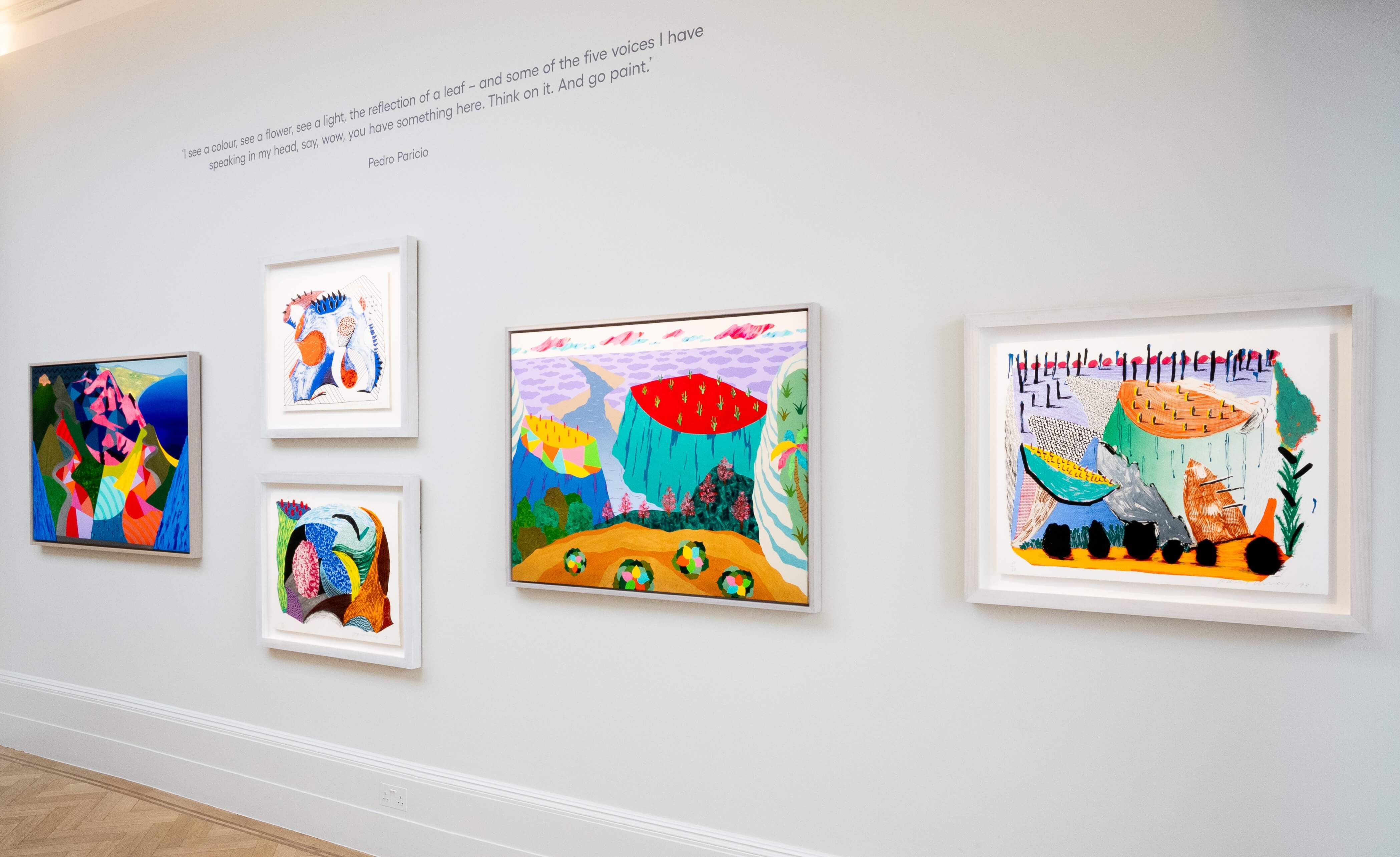
Landscape plays a defining role in anchoring both practices. For Hockney, the move to Los Angeles in the 1960s introduced a new visual vocabulary of light and openness, while his later returns to Europe re-engaged him with the cyclical nature of the seasons. Works drawn from his “Arrival of Spring” and Normandy periods emphasise this sensitivity to time and place, translating plein air traditions into a digital register without losing their observational core.
Paricio’s landscapes, by contrast, are shaped by the topography of Tenerife — volcanic terrain, dense forests and coastal horizons. These environments surface in paintings such as Canyon and Timber Line, where colour becomes structural rather than descriptive. In pairing these works with Hockney’s earlier prints, the exhibition establishes a visual tension grounded in observation and reconstruction.
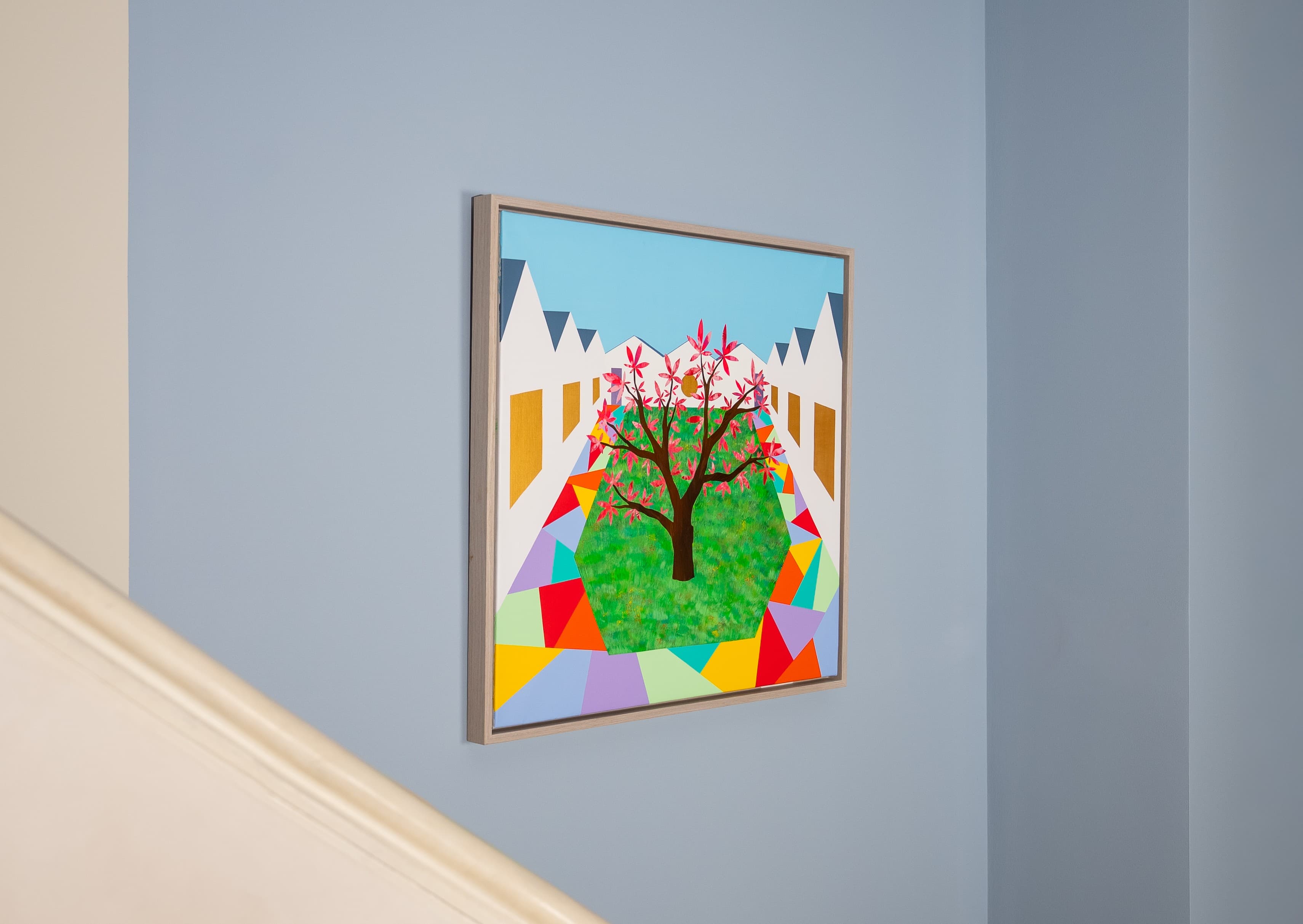
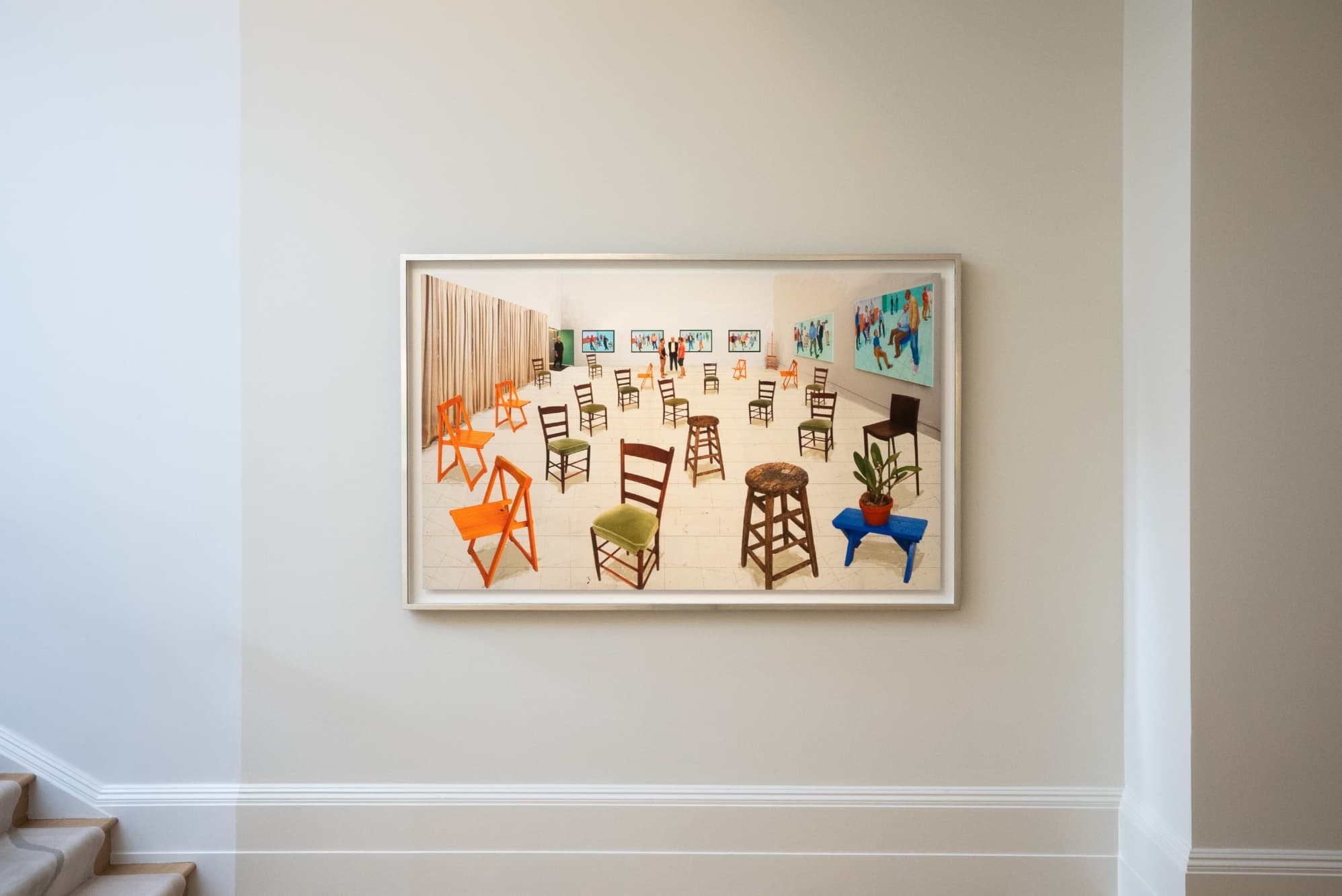
This interplay extends into more recognisable imagery. Paricio’s pool paintings, for instance, draw on Hockney’s seminal compositions but introduce a geometric language that disrupts their stillness. His large-scale triptych, which reimagines Hockney’s “Portrait of an Artist (Pool with Two Figures)”, is less an homage than a reframing — one that shifts emphasis from narrative clarity to formal experimentation. Elsewhere, quieter correspondences emerge. Floral studies and still lifes reveal how each artist approaches tradition from a different angle: Hockney through continual technical exploration, Paricio through painterly reinterpretation. In Hockney’s “Moving Focus” series, the influence of Renaissance perspective and Chinese scroll painting is reworked into fragmented viewpoints, subtly echoed in Paricio’s own spatial distortions.
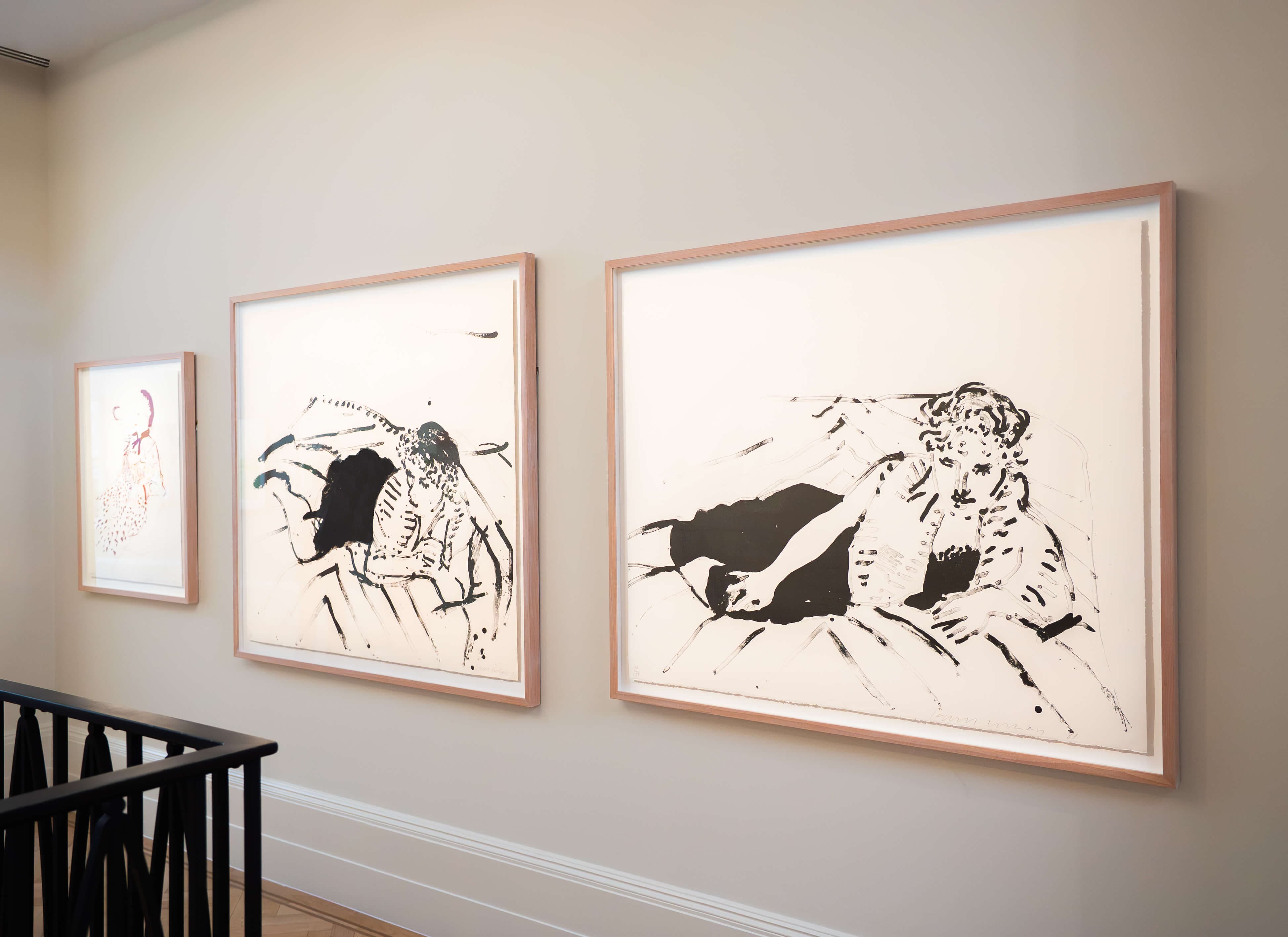
What ultimately binds the exhibition together is the process. By placing Hockney and Paricio side by side, Halcyon not only highlights the enduring relevance of Hockney’s practice but also suggests how his legacy is being actively reinterpreted by a new generation. Both artists treat painting as an evolving system, where ideas are revisited and rearticulated over time. Case in point, “Cycles of Renewal” ultimately positions creativity as cumulative — shaped as much by what is inherited as by what is newly made. In placing these works side by side, Halcyon offers a precise argument that renewal in art is rarely about rupture. More often, it is about return — to a motif, a landscape, or a way of seeing — and the possibility of encountering it differently each time.
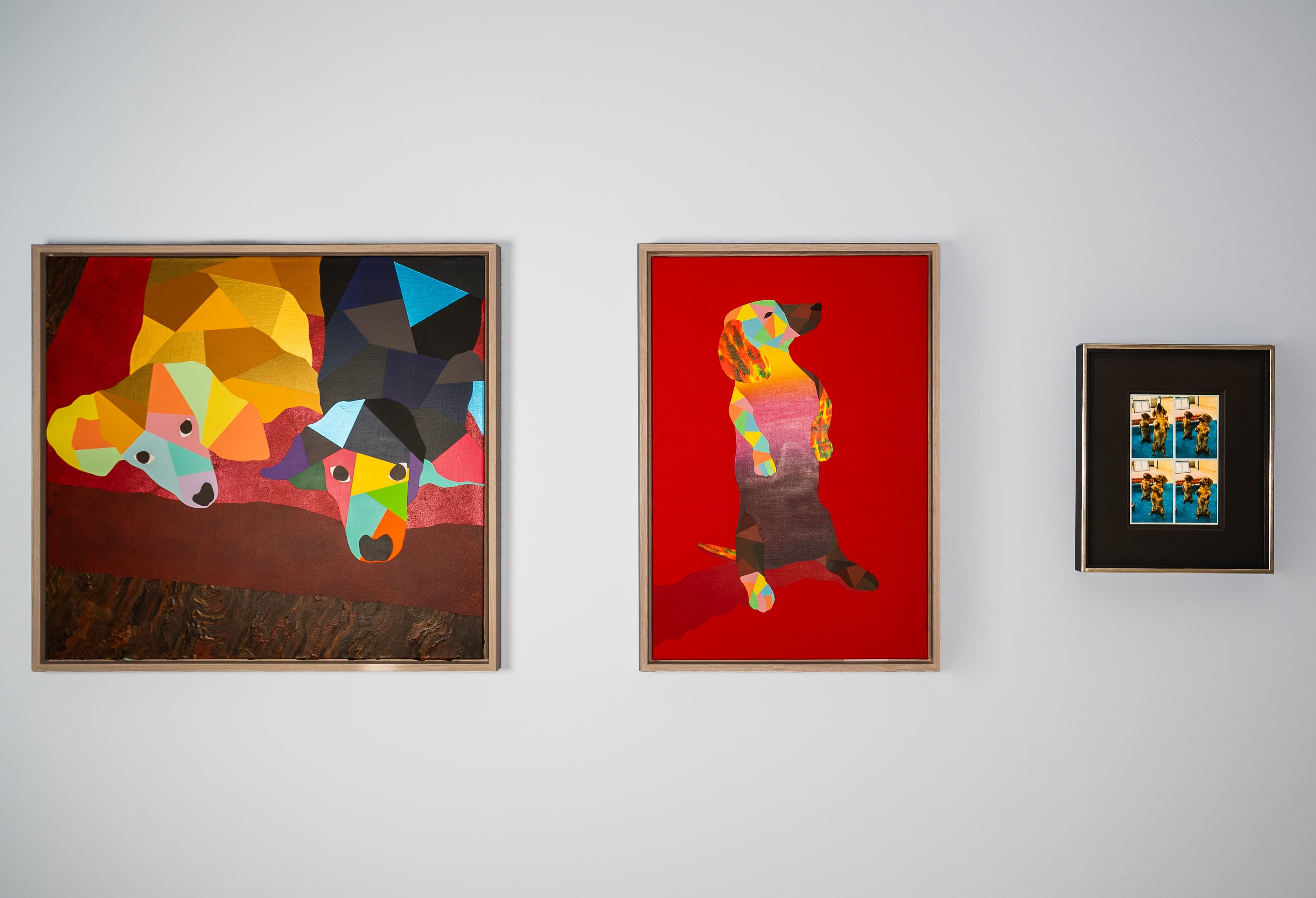
Free to the public, visitors can explore a diverse range of media, from Hockney’s pioneering iPad drawings and ‘Moving Focus’ series to Paricio’s newest body of paintings, which reinterpret some of Hockney’s most iconic subjects through kaleidoscopic patterns and expressive colour. The exhibition showcases portraiture, still lifes, and landscapes, including works from Hockney’s celebrated “Arrival of Spring” and “Normandy” works alongside Paricio’s bold tributes to the volcanic terrain of Tenerife.
For more on the latest in art and culture reads, click here.
Related Posts

Visiting London for the First Time? Here’s 10 things not to miss
-
Posted by
Ms Luxury Brand
Best Time to Visit London: A Seasonal Guide
-
Posted by

AMAFFI & MOMO: The Fusion of Pop Culture and Perfume
-
Posted by